Cutting Words: How Far Should an Editor Go When Reshaping a Dialogue Scene?
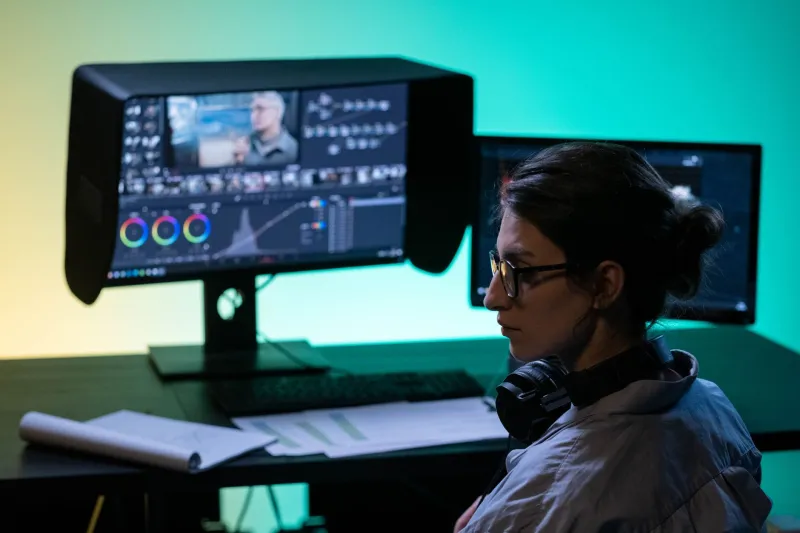
There's a version of editing that nobody really talks about in tutorials or YouTube breakdowns. It doesn't involve match cuts or color grades or snappy transitions. It happens in a quiet room, usually late at night, when you're sitting with two people talking on screen and you have to decide: whose version of this scene is this going to be?
That's the dialogue problem. And if you've been editing long enough, you've run into it.
Action Cuts Itself. Dialogue Doesn't.
Here's the thing about action sequences — the edit almost announces itself. Movement creates natural cut points. Energy builds, peaks, releases. You're riding a wave that the footage is already generating. There's real skill involved, don't get me wrong, but the structure is largely baked in.
Dialogue scenes are a completely different animal. You've got two (or more) people talking, and the camera probably covered it six different ways. Now you're sitting there with a pile of coverage and you have to construct something that feels like a single, unbroken human moment — even though it was shot over four hours with lunch in the middle.
Every single cut in a dialogue scene is a choice about performance. You're deciding when the audience sees someone's face. You're deciding whether they catch a flicker of doubt before someone speaks, or only after. You're choosing whether a pause reads as tension, grief, hesitation, or confidence. The actor delivered all of those options across multiple takes. You're the one picking which reality becomes permanent.
That's an enormous amount of power. And it comes with some real responsibility.
The Moment You Become a Co-Director
Let's say an actor played a scene with a long, deliberate pause before delivering a key line. They made that choice consciously. The director loved it in the room. But now you're in the edit, and that pause feels like it's killing the momentum. So you cut away to a reaction shot during the pause, trimming the silence, and suddenly the line lands faster — sharper, even.
Is that better editing? Maybe. Is it the same performance? Absolutely not.
You just made a directorial decision about how that actor's work is perceived. You reshaped the emotional rhythm of that moment. Sometimes that's exactly what needs to happen — footage doesn't always survive the journey from set to timeline intact, and it's your job to make it work. But sometimes you just got impatient with a choice that was actually doing something.
The difference between those two situations is what separates editors who elevate a film from editors who quietly sand down everything interesting about it.
Reading What the Performance Is Actually Doing
Before you start restructuring a dialogue scene, it's worth asking a simple question: what is this performance trying to accomplish?
Not what you think it should accomplish. Not what would make the cut feel cleaner. What is the actor — or the director, or the script — actually going for here?
Sometimes a slow delivery is intentional vulnerability. Sometimes an awkward pause is the point. Sometimes a line reading that feels slightly off in isolation is setting up something three scenes later. If you're cutting purely on instinct without understanding the intent, you can accidentally eliminate the very thing that makes a scene work.
Watch the scene without touching anything first. Not to find cut points — just to feel it. Where does your attention go? Where do you lean forward? Where do you check your phone? Those reactions are data. Use them.
When Reshaping Is Legitimate
None of this means you should be precious about dialogue scenes or treat every performance choice as sacred. Editors reshape dialogue constantly, and for good reason.
Coverage gets shot fast. Actors have good takes and less good takes, and sometimes the best line reading came in a take where everything else fell apart. Your job is to build the best possible version of the scene from all the material available — and that absolutely includes making cuts the director didn't plan, holding on reactions longer than intended, or restructuring the order of exchanges when the original rhythm isn't landing.
There's a famous story about The Silence of the Lambs where editor Craig McKay and director Jonathan Demme held on Jodie Foster's face longer than the script called for — just letting the audience sit with her reaction — and it became one of the most effective moments in the film. That's an editor understanding that the performance had more to give than the original cut was letting out.
Reshaping a scene is legitimate when you're serving the story. It becomes overstepping when you're serving your own impatience or aesthetic preferences at the expense of what's actually there.
The Reaction Shot Is Your Most Dangerous Tool
If there's one specific technique that gives editors the most influence over a dialogue scene, it's the reaction shot. And it's also the most misused.
Cutting to a reaction at the right moment can completely transform how a line lands. It can validate an emotion, create irony, build dread, or generate comedy. But cutting to a reaction at the wrong moment — or holding on it too long, or using the wrong take — can undermine a line, deflate a scene, or accidentally telegraph information the audience isn't supposed to have yet.
The timing of a reaction cut isn't just a pacing decision. It's a storytelling decision. You're telling the audience when to feel something and who to feel it through. That's about as close to directing as editing gets.
Be deliberate about it. Know why you're cutting to a reaction when you do. "It felt right" is a start, but being able to articulate what that cut is doing — emotionally, narratively — is what takes you from instinct to craft.
Respecting the Room You Weren't In
Here's the honest part: you weren't on set. You didn't hear the director explain what they were going for in that scene. You didn't see the fifteen takes before the one you're working with. You don't know what the actor was drawing on or what conversation happened between them and the director that changed everything in take seven.
That context gap is real, and it matters. It's why communication with the director in the edit room is so valuable — not just for approval, but for understanding. When you know why a choice was made, you can make a much better decision about whether to keep it, adjust it, or replace it.
The editors who do this best aren't the ones who impose the least — they're the ones who understand the most. They dig into the material until they can feel what the scene is trying to be, and then they make it that thing as powerfully as possible.
Sometimes that means trusting a long pause. Sometimes it means cutting right through it. The goal is to know the difference.
That's the whole job.