Nobody Pays $2,000 for a Timeline: Where the Real Money in Editing Actually Goes
Every editor has been on the wrong end of this conversation. You send over a quote, the client goes quiet for a day, and then comes the reply: "My cousin's nephew does this for $200." It's frustrating, but here's the uncomfortable truth — if you can't articulate what makes a $2,000 edit worth $2,000, the client has no reason to believe you either.
So let's actually break it down. Not with vague talk about "experience" and "craft," but with real hours and real deliverables.
The $200 Edit Is a Transaction. The $2,000 Edit Is a Process.
A bargain-rate edit is typically: drop footage in, trim the dead air, slap on a preset, export. Four to six hours, start to finish. And honestly? For a basic social clip, that might be all you need. There's no shame in that tier.
The premium edit starts before the footage is even ingested. It includes a pre-production call where the editor asks questions the client didn't think to ask — who's the audience, what's the single takeaway, where does this live, what's the call to action. That's an hour of work that shapes every cut that follows.
Then there's the review structure. Cheap edits come back as one monolithic draft, and revisions become a war of attrition. Premium edits come in passes: a story-locked rough cut, then a pacing pass, then polish. Each stage has a checkpoint, which means the client's feedback actually gets absorbed instead of triggering a three-week revision spiral.
Where the Extra Hours Actually Go
Here's a realistic breakdown for a 3-minute branded piece at the $2,000 tier:
- Discovery and prep: 2–3 hours. Reviewing references, building a cut strategy, organizing footage before touching a timeline.
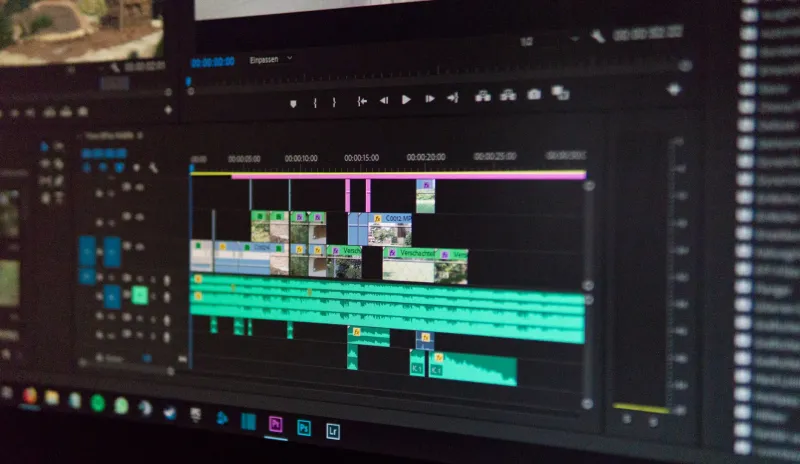
- Story assembly: 4–6 hours. Finding the spine of the piece, which usually means watching far more footage than ever ends up on screen.
- Sound design and mixing: 3–4 hours. This is where cheap edits scream "cheap." Music that ducks under dialogue, room tone that doesn't jump between cuts, effects that land without calling attention to themselves.
- Color work: 2–3 hours. Not a one-click LUT — shot matching, skin tone correction, building a look that fits the brand.
- Revision management: 2–4 hours. Yes, managing feedback is billable work, because it absolutely consumes the calendar.
That's 15–20 hours before you count the admin overhead, the software subscriptions, the hardware depreciation, and the taxes a freelance editor eats in a country without mandated benefits. Suddenly $2,000 starts to look less like a luxury and more like a living wage.
The Consistency Tax
Here's the part nobody puts on the invoice: the difference between cheap and premium isn't the best moment of the edit — it's the worst moment. A $200 edit can have a brilliant 20 seconds. A $2,000 edit has zero dead spots, because someone spent the unglamorous hours making sure every second holds weight.
Clients can't always name this. But they feel it. They feel it when the video doesn't sag in the middle, when the audio doesn't make them reach for the volume knob, when the color doesn't shift between scenes shot on different days. That invisible reliability is what they're actually paying for.
How to Say It Without Sounding Defensive
When a client balks at a quote, don't justify your rate — itemize their outcome. "For $2,000 you get three structured review rounds, broadcast-level audio, and a color pass that keeps your brand consistent across every platform we deliver to." That's not you being expensive. That's a product.
And if they still want the $200 version? Fine. Refer them out, stay friendly, and let the difference speak the next time their cousin's nephew delivers something that sounds like it was mixed in a bathtub.
The editors commanding premium rates in this industry aren't necessarily ten times more skilled. They've just learned to sell the process, the checkpoints, and the consistency — the stuff that never shows up in a showreel but always shows up in the invoice justification.