Visual Rhymes: Why Match Cuts Are the Most Powerful Tool You're Probably Underusing
Photo: film editor working on timeline in dark editing suite with multiple monitors, via fr.web.img2.acsta.net
There's a moment in 2001: A Space Odyssey where a bone spinning through prehistoric air cuts directly to a spacecraft floating through orbit. No voiceover. No dialogue. No title card explaining the passage of millions of years. Just two shapes, two movements, one devastating idea. That's a match cut. And it might be the most efficient storytelling device ever invented.
The wild thing? Most editors treat it like a party trick.
That needs to change — especially right now, when audiences are increasingly tuning out the moment they hear an explanatory voiceover. The smartest editors working today are leaning hard into match cuts not as a stylistic flourish, but as a genuine narrative engine. Let's get into why that works, and how you can actually do it.
What a Match Cut Actually Is (And What It Isn't)
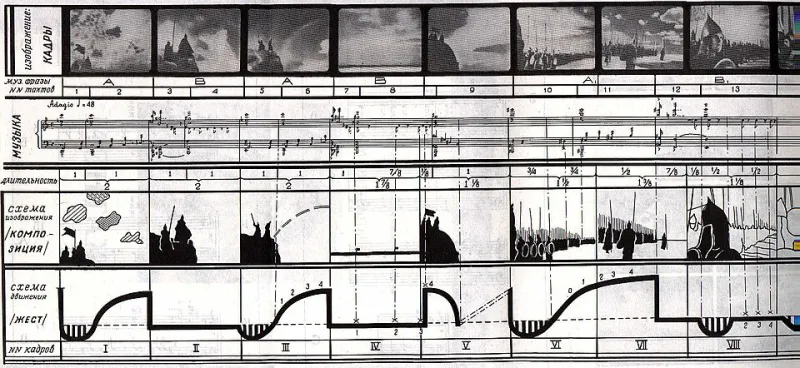
A match cut is a transition between two shots that share a strong visual, spatial, or movement element — even when the content of those shots is completely different. The brain fills in the gap. The emotional leap happens almost unconsciously.
That's the key word: unconsciously. A well-executed match cut doesn't announce itself. Viewers don't stop and think, "Oh, clever edit." They just feel something shift. That's the goal.
It's worth separating this from a few things it gets confused with. A J-cut or an L-cut is an audio transition. A cross-dissolve is a time transition. A match cut is specifically about visual continuity across a conceptual break. The images rhyme. The meaning multiplies.
The three most common types you'll work with:
- Shape matching — A circular clock face cuts to a full moon. A spinning basketball cuts to Earth from orbit.
- Movement matching — A character swings a baseball bat; the motion carries into the next shot of someone swinging a golf club.
- Spatial matching — A character reaches for a door handle in one location; the cut lands on a different hand, different door, same position in frame.
Each one tells the audience something without saying a word.
Why This Technique Is Hitting Different Right Now
Here's a real talk moment: dialogue-heavy editing is getting punished by audiences. Not because people are dumb — but because visual storytelling has raised the bar. Between prestige TV, short-form video, and a generation raised on YouTube, viewers have developed a genuine sensitivity to show vs. tell. When you lean on narration to explain a transition, you're essentially admitting your images couldn't do the job.
Match cuts solve this elegantly. They let you move through time, space, and even theme without stopping the visual momentum. That's huge for narrative work, documentary editing, and especially branded content where you need to tell a brand's whole story in 90 seconds.
There's also something happening in the social media space that's accelerating this. On platforms where the first two seconds determine whether someone keeps watching, editors who can create visual intrigue through the cut — rather than after it — have a real structural advantage.
How to Find Match Cuts in Your Footage (Even When You Didn't Plan Them)
Here's the honest truth: some of the best match cuts aren't planned on set. They're discovered in the edit bay, usually when you're staring at two clips wondering how on earth you're going to connect them.
Train yourself to look for these four things when you're reviewing footage:
1. Shape echoes. Does anything in Shot A visually mirror something in Shot B? Circles, lines, silhouettes — these are your friends. Even partial matches work if the movement carries the viewer's eye.
2. Directional momentum. Is there movement in the frame — a pan, a tilt, a subject walking left to right? Movement that continues across a cut creates powerful spatial continuity even when the locations are completely different.
3. Color anchoring. This one's sneaky. If a dominant color in the last frame of Shot A appears immediately in the first frame of Shot B, the brain treats it as visual continuity. You can build a match cut around color alone.
4. Emotional parallel. Two people reaching for two completely different things can cut beautifully if the desire behind the gesture is the same. This is where match cuts get genuinely cinematic — when the rhyme is emotional, not just visual.
The Execution: Timing Is Everything
Finding the match is step one. Cutting it right is a different skill entirely.
The general rule: cut on the peak of the movement, not after it. If someone throws a punch, you cut at the moment of maximum extension — not when the arm starts to retract. That peak energy is what the brain latches onto and carries into the next shot.
Also, be ruthless about frame position. If your subject's face is in the upper-left third of Shot A, you want something significant in the upper-left third of Shot B. The eye needs somewhere to land. When that landing spot is off, the cut feels clumsy even if viewers can't articulate why.
And honestly? Less is more. One or two deliberate match cuts in a piece hit harder than a string of them. When you overuse the technique, it stops feeling intentional and starts feeling like a tic.
A Few Real-World Applications Worth Stealing
If you're editing a documentary or a brand film, match cuts are incredible for compressing time. A subject's hands at 20 years old, cutting to the same hands at 60 — no title card needed. The audience gets it.
For narrative work, use movement matches to signal psychological connection between characters, even across different scenes. Two people reaching for their phones simultaneously in different locations can establish a bond (or a parallel) that dialogue would take a full scene to set up.
For social content? Match cuts are attention-retention tools. A satisfying visual rhyme right around the 3-4 second mark can reset a viewer's engagement and buy you another several seconds of watch time. That's not a small thing when you're fighting the algorithm.
The Bottom Line
Match cuts are one of those techniques that feel almost too simple on paper, but the execution gap between a clumsy attempt and a clean one is enormous. The editors making this look effortless have usually spent serious time studying how the eye moves, how the brain processes continuity, and how emotion transfers across a visual break.
Start small. Look for one legitimate match cut opportunity in your next project. Cut it clean. Watch how it lands. Then build from there.
The dialogue can wait. Let the images do the work.