Short-Form Broke the Rules. Here's Which Ones Actually Needed Breaking.
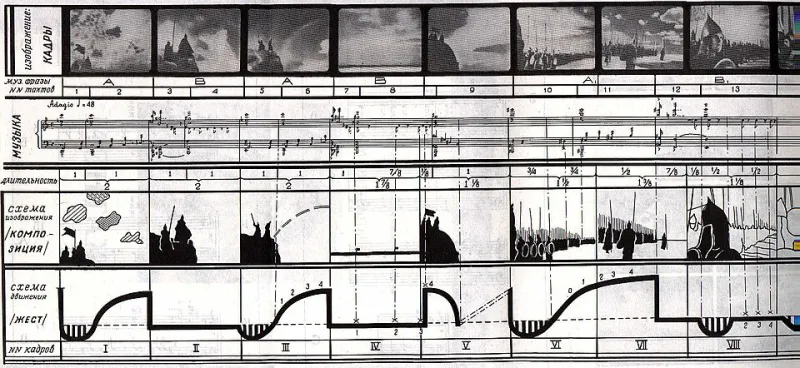
Photo: С.М. Эйзенштейн, Public domain, via Wikimedia Commons
I want to be honest with you about something: a lot of the pacing advice floating around editing communities right now is written by people who are either completely allergic to short-form video or completely drunk on it. Neither extreme is useful.
The truth is messier and more interesting. TikTok, YouTube Shorts, and Instagram Reels have genuinely changed editing — not just as platforms, but as an influence on how audiences process visual rhythm everywhere. At the same time, some of the fundamentals that editors have been leaning on for decades aren't just surviving the short-form era. They're thriving in it.
So let's actually break this down. Which old rules are dead? Which new conventions are worth keeping? And how do you edit for the algorithm without turning every project into a dopamine delivery mechanism with no soul?
The Rules That Needed to Die
The slow burn intro is over. For a long time, the conventional wisdom was that you needed to establish before you could engage. Set the scene. Introduce the space. Let the audience get comfortable. That approach worked when people were sitting down with a bowl of popcorn and a 90-minute commitment. It does not work when someone's thumb is hovering over the screen.
Short-form video proved — with billions of data points — that audiences will accept being dropped into the middle of something. In fact, they prefer it. Starting in media res isn't just a stylistic choice anymore; it's table stakes. If your first three seconds aren't earning the next three seconds, you've already lost.
The mandatory establishing shot is dying too. Traditional editing doctrine said you always establish location before you cut into it. Wide, medium, close. That hierarchy made sense for linear TV where audiences needed spatial grounding. But short-form creators figured out that context can be built cumulatively — you don't have to front-load it. Drop people into a close-up, let the environment reveal itself through action, and the brain will construct the space just fine.
Rigid act-structure timelines. The three-act structure isn't going anywhere as a concept, but the idea that it needs to map to specific time markers? That's loosening up. Short-form editors are compressing full narrative arcs into 60 seconds regularly, which means the beats can land anywhere — and audiences have developed the visual literacy to follow.
What Short-Form Got Wrong (And Where Editors Are Overcorrecting)
Okay, here's where I'm going to lose some people, but it needs to be said.
The obsession with cutting every 1-2 seconds is not a universal truth. It's a response to a specific viewing context — vertical video, sound-off browsing, competing with a hundred other videos in an infinite scroll. When you apply that same frenetic rhythm to a 10-minute YouTube documentary or a branded film, it doesn't create energy. It creates exhaustion.
I've watched editors take short-form habits into long-form projects and wonder why the whole thing feels like it's screaming. Pacing isn't just about cut frequency. It's about contrast. A fast cut only feels fast if something slower preceded it. When everything is urgent, nothing is.
The other overcorrection: treating audio as an afterthought because short-form video is often watched muted. That logic makes sense for a 15-second Reel. It's a disaster for anything longer than two minutes. Sound design and audio pacing are still foundational craft — don't let the muted-scroll era convince you otherwise.
The Old Techniques Making a Quiet Comeback
Here's the part that genuinely surprises people: some classic editing techniques are experiencing an unexpected renaissance because of the short-form era, not despite it.
Rhythmic cutting to music. This has always been a thing, but short-form creators — especially on TikTok — have elevated it to an art form. Cutting on the beat, anticipating the drop, using audio transitions to mask visual cuts. Editors who studied this in music video work from the 90s and early 2000s are suddenly very relevant again.
The smash cut. Jarring, abrupt, no-warning transitions were considered aggressive in traditional editing. In short-form? They're currency. A well-placed smash cut creates a jolt that re-engages the viewer. It's essentially a pattern interrupt, and it works. The technique has been around forever — short-form just gave it a new home.
Silence as a tool. This one's counterintuitive. In a landscape where everyone is throwing sound effects and trending audio at the viewer, a moment of genuine silence hits differently. Creators who understand this are using audio drops strategically to create emphasis. It's the same principle sound designers have used in film forever — contrast creates impact.
How to Edit for the Algorithm Without Losing Your Voice
This is the actual question underneath all of this, right? Because anyone can learn to cut fast and add trending audio. The harder thing is learning to work within algorithmic constraints without becoming a content machine.
Here's how I think about it:
Understand the platform's physics, then work within them deliberately. Every platform has a native rhythm. TikTok rewards pattern interrupts and hooks. YouTube Shorts rewards strong openings and satisfying endings. Reels reward visual variety. Learn those rhythms the way a musician learns time signatures — not so you're trapped by them, but so you know exactly when breaking them will land.
Protect your instincts at the story level. You can cut fast and still have something to say. The pacing is the vehicle, not the message. Editors who get lost in algorithmic optimization often sacrifice story logic for surface-level energy — and audiences feel that hollowness, even if they can't name it.
Test, but don't let data replace judgment. Retention graphs and click-through rates are useful information. They're not a creative director. Use analytics to understand where you're losing people, but trust your editorial instincts about why — and what the fix actually is.
The Bottom Line
Short-form video didn't destroy editing craft. It stress-tested it. The techniques that couldn't survive contact with a distracted, scroll-happy audience probably deserved to be questioned anyway. The ones that held up — rhythm, contrast, emotional momentum, the power of a clean cut — are holding up for a reason.
The editors who are winning right now aren't the ones who went all-in on TikTok brain, and they're not the ones who refused to adapt. They're the ones who figured out which rules were actually worth keeping — and which ones were just habits nobody had bothered to challenge yet.
That's the edit worth making.