Gone But Not Forgotten: Making Peace With the Sequences That Never Made It Out Alive
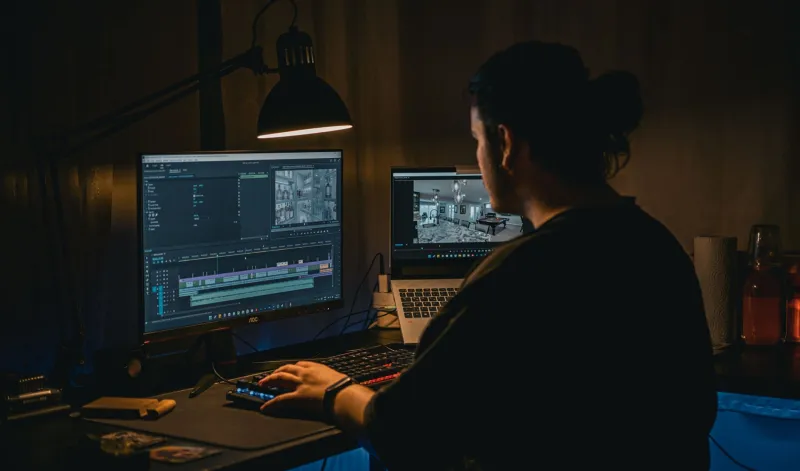
There's a specific kind of grief that only video editors understand. It hits somewhere between the client's third revision email and the moment you drag your best sequence into the trash bin. You spent two days on that cut. The music landed perfectly. The pacing was surgical. And now it's gone, replaced by something safer, something the client's cousin thought made more sense.
Welcome to the rejection reel — the invisible archive of brilliant work that never made it past the finish line.
Here's the thing nobody tells you when you're starting out: this happens to every editor, at every level, on every kind of project. And the sooner you stop treating it like a personal failure, the better you're going to be at this job.
Why the Best Stuff Gets Cut First
It sounds backward, but the sequences editors are most proud of are often the first ones to go. Why? Because great editing is frequently invisible to the people who aren't trained to see it. A client watching your rough cut isn't analyzing your subframe timing or appreciating the way you used a J-cut to carry emotional weight from one scene to the next. They're watching for whether their logo is big enough.
That disconnect isn't a failure of your work — it's a communication gap. Sophisticated editing choices can feel strange or unfamiliar to people who don't spend their days inside a timeline. What reads as bold and intentional to you might read as "something feels off" to someone who doesn't know why.
There's also the practical reality that projects change shape. Runtimes shrink. Narratives shift. The brilliant four-minute sequence you built around a piece of music the client loved in week one gets axed in week three when the legal team flags a licensing issue. None of that is about the quality of your edit.
The Psychology of Letting Go
Here's where it gets messy. Most editors don't just build sequences — they attach to them. You're not moving clips around on a timeline; you're making hundreds of micro-decisions that reflect your instincts, your taste, your read on the story. When that work gets rejected, it can feel like a rejection of your creative identity.
That feeling is real, and it's worth acknowledging instead of just pushing through it. Give yourself a minute. Be annoyed. Then get back to work.
What helps is separating the work from the outcome. The sequence was good. The outcome didn't include it. Those are two different things. A great quarterback can throw a perfect spiral that gets dropped in the end zone — the throw was still perfect. Your edit can be technically and emotionally excellent and still not survive the final cut for reasons that have nothing to do with its quality.
The editors who struggle most with this are the ones who need external validation to confirm the value of their work. Building internal confidence in your own judgment — the ability to look at something you made and know it's good regardless of whether anyone else keeps it — that's the long game.
Build Your Own Archive (Seriously, Do This)
One of the most practical things you can do for your career is stop deleting rejected sequences and start saving them. Create a folder — call it whatever you want, "The Vault," "Cut Room Floor," "Someday Maybe" — and drop every rejected sequence in there with a note about the project and why it got cut.
This archive becomes one of the most valuable creative resources you'll have. Here's why:
Future projects. The sequence that didn't fit this project might fit the next one perfectly. Editing approaches, music choices, structural ideas — all of it can be repurposed. Good instincts don't expire.
Portfolio material. Some of your best work will never see the light of day in its original context. But that doesn't mean it can't live somewhere. A personal reel, a behind-the-scenes breakdown, a technique demo — your rejected work can absolutely become portfolio content that shows what you're capable of without violating client confidentiality.
Your own development. Revisiting old rejected sequences six months later is genuinely illuminating. Sometimes you'll look back and realize the client was right. Sometimes you'll look back and feel even more confident that your instinct was correct. Either way, you learn something about how your taste and judgment are evolving.
Killing Your Darlings Makes You Sharper
This is the counterintuitive part. The editors who have learned to cut their own best work — not because someone told them to, but because they can see when something isn't serving the story — are almost always better than the ones who protect every sequence they love.
There's a discipline that comes from this practice. When you stop treating your creative output as precious and start treating it as material to be shaped toward a goal, your decision-making gets cleaner. You stop asking "is this good?" and start asking "is this right for this project?" Those are very different questions.
The ability to emotionally detach from your own work — to look at something you built and ask whether it actually belongs — is a skill that takes time to develop. But every time you let something go, even when it hurts, you're building that muscle.
Reframing the Whole Thing
Maybe the most useful shift is this: stop thinking of rejected sequences as work that failed and start thinking of them as work that was completed. You made something. It was good. The project moved in a different direction. The work still happened.
Your creative output isn't defined by what survives the final export. It's defined by the cumulative practice of making decisions, developing instincts, and refining your point of view — project after project, cut after cut.
The rejection reel is real. It's also evidence that you're working at a level where your ideas are big enough to not always fit the box. That's not a problem. That's just what it looks like to be a working editor who actually has something to say.
Keep making the thing. Even when it doesn't make the cut.