Every Beat, Every Cut, Zero Feeling: The Montage Mistake Editors Keep Making
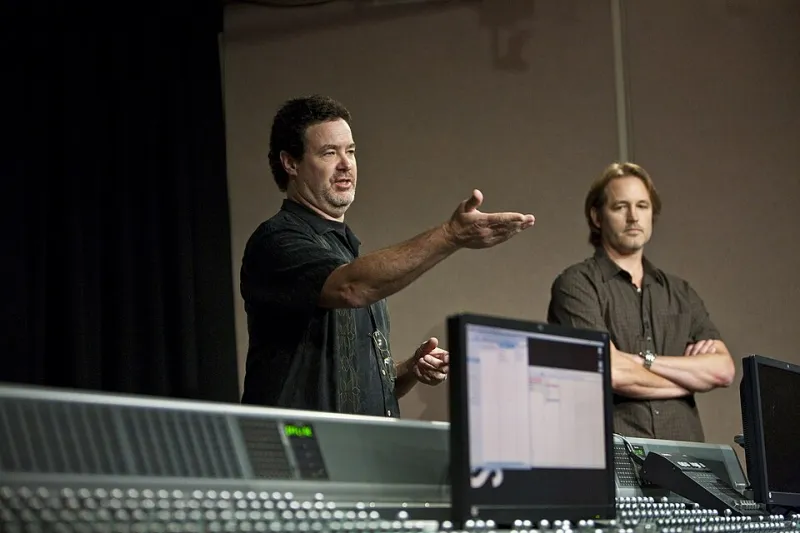
Photo: Vancouver Film School, CC BY 2.0, via Wikimedia Commons
There's a specific kind of editor high that comes from locking a cut perfectly to a snare hit. You know the one. The music drops, the clip changes on the exact millisecond, and you lean back in your chair feeling like an absolute genius. It's satisfying in a way that's almost chemical.
And it's also, a lot of the time, completely emotionally hollow.
I'm not here to tell you that beat-synced editing is bad. It isn't. Used well, it's a legitimate tool that can build energy, momentum, and style. But there's a growing habit in the editing world — especially as short-form content has trained a whole generation of editors — where cutting to every single beat has become less of a choice and more of a reflex. And reflexes, by definition, aren't decisions. They're just reactions.
The question worth asking isn't can you cut on every beat. It's should you.
What Beat-Cutting Actually Does to a Viewer
When you sync your cuts tightly to a rhythm, you're essentially handing the audience a metronome. Their brain starts anticipating the next cut. They know — consciously or not — that something is going to change on beat four. And once they're locked into that anticipation, they stop feeling the content and start tracking the pattern.
That's a problem. Because emotional resonance doesn't live in patterns. It lives in surprises, in pauses, in the moments where time seems to stretch just slightly past where it was supposed to end.
Think about the last time a movie genuinely wrecked you emotionally. Was it because the edit was rhythmically precise? Or was it because the camera stayed on someone's face just a little too long — long enough for you to feel the weight of what they were carrying?
Emotion needs room to land. Beat-cutting, when overdone, keeps sweeping the landing pad clean before anything can touch down.
The Films That Broke the Rule and Won
Let's talk specifics, because this isn't just theory.
In Rocky (1976), the famous training montage is often cited as the gold standard of the form. But go back and actually watch it. There are moments where Bill Conti's score is pushing hard and the edit just... holds. Rocky's face. The road in front of him. The steps of the Philadelphia Museum of Art growing closer. Stallone and editor Richard Halsey weren't slaves to the beat — they were using the beat as a canvas, not a cage. The emotional climax of that sequence works because of what they chose not to cut away from.
Or consider the opening of Up (2009). Technically, that's a montage. Pixar's editors could have cut it to a tight, rhythmic pulse and made it feel like a highlight reel. Instead, they let moments breathe in ways that felt almost uncomfortably long for an animated film aimed partly at kids. The result is one of the most emotionally devastating eight minutes in American cinema history. No snare hits required.
More recently, Whiplash (2014) — which you'd think would be the ultimate argument for beat-cutting given that it's literally about drumming — actually uses rhythmic editing as a form of tension and release rather than constant stimulation. Editor Tom Cross earned an Academy Award for understanding that the spaces between the beats were where the story lived.
The Selective Cut: What It Looks Like in Practice
So how do you actually apply this? What does restraint look like when you're sitting in front of your timeline?
Start by asking yourself a simple question for every cut you make: Am I cutting because something new needs to be shown, or am I cutting because the beat told me to?
If it's the latter, sit with it for a second. What happens if you hold the current shot through that beat? Does the emotion build? Does something in the performance — a micro-expression, a subtle shift in body language — get a chance to register?
Another useful exercise: mute your music and watch your montage back in silence. If the sequence feels like it has no internal logic without the audio propping it up, that's a sign you've been cutting for the music rather than with it. The best montages work as visual sequences first. The music amplifies something that's already there.
You can also try what I'd call the "one beat late" experiment. Take a cut you've locked perfectly to a hit and deliberately delay it by a few frames — just enough to land after the beat rather than on it. In a lot of cases, that tiny delay creates a sense of weight, like something settling rather than snapping. It can transform a technically impressive cut into one that actually feels like something.
When Beat-Cutting Is Exactly Right
Here's where I'll pump the brakes on my own argument, because fairness matters.
There are absolutely contexts where tight, relentless beat-cutting is the correct choice. Sports highlight reels. Hype trailers. Certain genres of music video where the style is the statement. When you want to communicate pure energy, momentum, or spectacle — not emotional depth — rhythmic precision earns its keep.
The issue isn't the technique. It's the misapplication of it. Editors who reach for beat-syncing by default, regardless of the emotional goal of the sequence, are essentially using a hammer for every job in the toolbox. Sometimes you need a scalpel. Sometimes you need to just put the tools down and let the shot do the work.
The Real Flex Is Knowing When to Hold
Here's the thing nobody tells you when you're starting out: the technically impressive edit and the emotionally effective edit are often two completely different cuts. The one that makes other editors nod in appreciation and the one that makes a regular viewer tear up in a movie theater are not always the same thing.
The montage trap is seductive because it feels like mastery. Every cut lands. Everything is tight. The sync is immaculate. But if your audience is admiring the craftsmanship instead of feeling the story, you've made something that serves you more than it serves them.
The editors who are really doing something special — the ones whose work you remember years later — are the ones who know that sometimes the most powerful thing you can do is nothing. Hold the shot. Trust the performance. Let the beat pass without a cut and see what fills that space.
More often than not, it's exactly the feeling you were looking for.