Eight Minutes From Ninety: Turning a Podcast Into Video People Finish
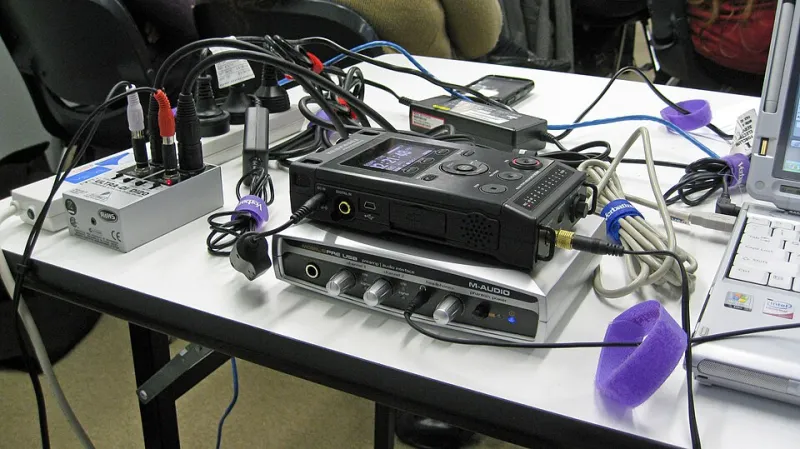
Photo: Stephan Ridgway from Sydney, Australia, CC BY 2.0, via Wikimedia Commons
Every podcast producer has the same idea in 2026: take the 90-minute interview and turn it into an eight-minute video. The idea is good. The execution usually is not. Most podcast-to-video edits are just clips stitched together with captions and a zoom. They hit the highlights, but they do not tell a story. People scroll.
The job is not to compress the episode. The job is to find the story hiding inside the conversation and build a short video around it. That means transcript review first, footage second. It means treating captions and b-roll as tools, not decoration. And it means cutting for retention without turning the whole thing into a hyperactive mess.
Transcript Review: Find the Spine, Not the Highlights
Do not start by scrubbing through the timeline. Start with the transcript. Read it without playing the audio. You are looking for the spine: the one change, confession, argument, or realization that makes the episode worth watching. Highlight the moments where the guest contradicts themselves, laughs at something painful, or says the thing they did not plan to say.
Then write a one-sentence summary. Not the topic. The story. For example: a chef who built a restaurant empire discovers the only thing he actually misses is cooking for his family. That sentence is your north star. If a clip does not serve it, it does not go in.
Mark timecodes for three to five beats. Setup, turn, payoff. You do not need a full three-act structure in eight minutes, but you do need a shape. The first beat should make the viewer curious. The second should complicate the question. The third should land somewhere honest. If you cannot find three beats, you do not have a video yet. You have a clip.
Build Visual Variety From Limited Footage
Most podcasts are shot on two cameras, maybe three, in a room that has one good angle and one plant. That is enough. Use the wide to establish. Use the close-up when the guest gets quiet. Use the other angle for reactions. If you only have one camera, create variety with punch-ins, reframes, and cutaways. But be careful. A punch-in every four seconds is not variety. It is a nervous tic.
B-roll should do work. If the guest talks about a childhood kitchen, show the kitchen. If they talk about a failed business, show the paperwork, the storefront, the empty chair. Use stills, screen recordings, archival photos, and simple graphics. You do not need stock footage of a generic handshake. You need evidence. Ten to fifteen percent of the runtime is usually enough. More than that and the video starts to feel like a slideshow with a podcast underneath.
Captions and B-roll With Restraint
Captions are not optional in 2026. Most people watch with the sound off at least part of the time. But captions do not have to be karaoke. Use keyword captions for emphasis. Keep speaker labels clear. Make the text big enough to read on a phone, but do not let it cover faces or the one piece of b-roll that actually matters.
Use b-roll the same way. If the guest says something abstract, a graphic can help. If they say something specific, show the specific thing. Do not cut away from a great facial reaction just because you have a clip of a city skyline. The face is often the b-roll. A pause with a reaction shot can do more than ten seconds of stock footage.
Cut for Retention Without Over-Editing
Remove the filler. Cut the false starts. Trim the long setup. But do not remove every pause. A short silence before a confession is not dead air. It is tension. The mistake is cutting so tightly that the guest sounds like a machine. Keep the breath. Keep the laugh. Keep the moment where they look off-camera to think.
Use pattern interrupts, but sparingly. A new angle, a caption, a b-roll cut, a graphic. Every twenty to forty seconds is plenty. If you add a zoom, a whoosh, and a sound effect every time the speaker makes a point, the viewer stops hearing the point. The edit should serve the story, not compete with it.
The Eight-Minute Structure
The first fifteen seconds need a hook. Use the best line from the interview, not a slow intro. Then give context in ninety seconds or less. Who is this person, and why should we care? The middle is the story. The turn is where the guest reveals something unexpected. The last minute is the payoff. Do not tack on a long call to action. One clear line is enough.
If the episode is ninety minutes, you are not trying to represent all of it. You are trying to make one idea land. That means leaving good material out. It means killing the joke that makes you laugh but does not serve the spine. It means trusting the audience to want a story more than they want a summary.
Review and Delivery
Send the client a transcript-based cut with timecodes. Ask a specific question: does this feel like the episode, or does it feel like a highlight reel? Do not ask if they like the captions. That is a separate conversation. Deliver horizontal and vertical versions if you can. Check the audio on phone speakers. Check the captions on a small screen. Keep the project organized so you can make the inevitable revision without rebuilding the whole thing.
Podcast-to-video is editorial work. The clip is not the story. The transcript is not the story. The story is the thing you find when you read the conversation, decide what it is really about, and then cut everything that is not that. Eight minutes is enough. You just have to earn them.